
Lots of train journeys either end at one of London’s stations or cross through London. This guide will help you understand what your ticket covers and how it works.
“Includes a journey across London by tube, DLR or train.”
This means your ticket includes one journey across London on the Underground, DLR, Elizabeth line or Thameslink services.
Where to find it in Railboard
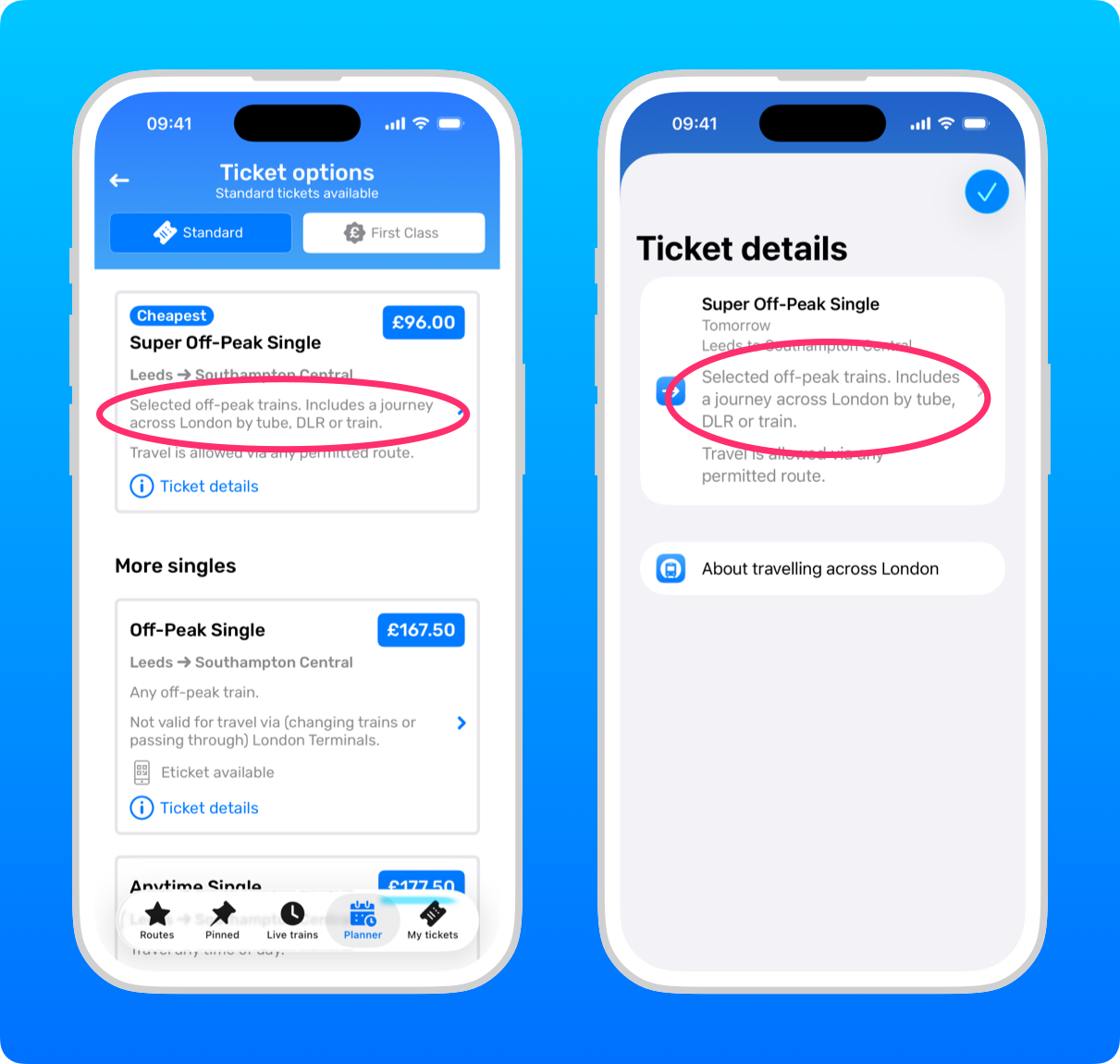
Rules
The journey has to be one continuous journey, meaning that once you leave the tube network, your ticket won’t be valid for another journey across London.
Also, the journey technically has to be between specific stations. We’ve included the complete list below, but realistically, the stations in your planned journey will be on the list, so don’t worry too much about this. Just make sure you do it in one journey; that part is important.
What your paper ticket will look like
If you were lucky enough to save money with Split Tickets, you’ll have multiple paper tickets. The one that will work with the ticket barriers in London will be marked with a cross ( + ) sign.
Different ticket machines might print that cross symbol slightly differently, so it may look more like ( ✠ ) or ( † ). It doesn’t matter, they all mean the same thing: your ticket can be used for one cross-London transfer.
How to use your cross-London transfer paper ticket
You’ll feed your paper ticket into the barriers, and then (importantly) collect it again as you go through. If you have any problems here, talk to a member of staff at the tube station.
“Includes unlimited travel on London Travelcard Zones 1-6.”
This means your ticket includes a London Travelcard, which you can use to have unlimited travel within the given zones on the London Underground, DLR, London Overground, London Trams, Elizabeth line, and any trains that run within the given fare zones.
It also gives you unlimited travel on all London buses, regardless of what zones they cover.
Where to find it in Railboard

Zones
Instead of Zones 1-6, you may have a Travelcard for Zones 1-4 or Zones 1-9. You can see what zone each station is in on Transport for London’s standard tube map or their tube and rail map.
What your paper ticket will look like
Your Travelcard paper ticket will be the one with the TfL roundel (the outline of the tube logo) and the word “Travelcard” at the top.
How to use your Travelcard paper ticket
At tube stations, you’ll feed it into the barriers and (importantly) collect it again as you go through. At DLR and train stations, you’ll feed it into the barriers if they have them; if not, just keep it on your person, ready to show a ticket inspector if necessary. And on London buses, you just show it to the driver as you get on; no need to show it again as you get off.
What times you can use your Travelcard
Different types of Travelcards can be used at different times. Note that the times below may be altered if a railcard is applied to the Travelcard.
Anytime Day Travelcards
These can be used at any time on the date shown, until 04:30 in the early morning the next day.
Off-Peak & Super Off-Peak Day Travelcards
From Monday to Friday, these can be used from 09:30 in the morning on the date shown, until 04:30 in the early morning the next day. At weekends and bank holidays, they can be used any time.
Super Off-Peak tickets may have different conditions for the rest of your journey on National Rail services.
Route restrictions
Your Travelcard may specify a route restriction, such as “Thameslink only”. This restriction only refers to the part of your journey outside the covered London fare zones.
Once you’re inside the London fare zones your Travelcard covers, you can use all the forms of transport mentioned above, including travelling on train services run by other train operating companies (assuming the part of the service you travel on is entirely within the fare zones specified on your Travelcard).
Why might you get a Travelcard instead of a cross-London transfer?
We use all sorts of clever algorithms to find you the cheapest Split Tickets; sometimes buying a Travelcard can be cheaper than using a cross-London transfer. As a passenger, you’ll still just transfer stations as normal, only with a bit more flexibility, because your transfer no longer needs to be done in one continuous journey.
“Includes travel on London Underground Zone 1.” or “Includes travel on London Underground and DLR Zones 1-2.”
Your ticket’s origin or destination station will be something like “London Underground Zone 1” or “London Underground and DLR Zones 1-2”. The exact zones may be different; it depends on your ticket.
What this means is you’ll travel into London and can then travel onward to a London Underground or DLR station within the given zones on your ticket. You can see what zone each station is in on Transport for London’s standard tube map or their tube and rail map.
Where to find it in Railboard

Rules
All stations you travel through must be in the given zones on your ticket. And, just like a cross-London transfer, your ticket is only valid for one continuous journey.
While you’ll typically be travelling into London to one of its terminal stations, unless your ticket specifies otherwise, your tube or DLR journey can start and end at any London Underground or DLR station within the given zones. But some tickets require you to change onto the Underground at a specific station during your journey into London.
What your paper ticket will look like
Your paper ticket won’t have any special markings on it, but the origin or destination will say something like “London Underground Zone 1” or “London Undergrnd Zones 1-2” (that’s not a typo; the names on paper tickets need to fit inside 26 characters).
How to use your Underground zones paper ticket
Just like with the other two forms of cross-London travel, you’ll feed your paper ticket into the barriers, and then collect it again as you go through.
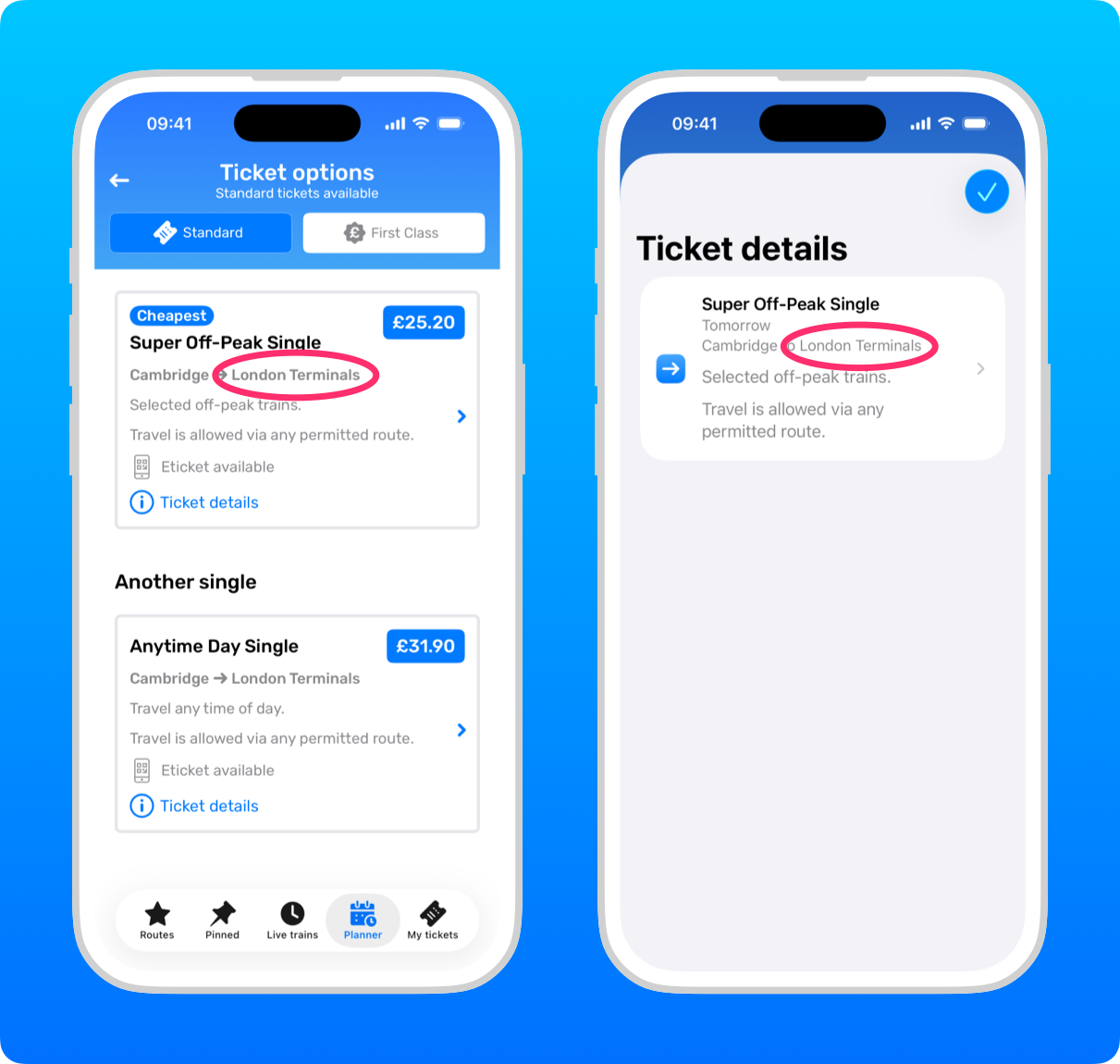
What are the London Terminals?
Many tickets have “London Terminals” as either their origin or destination. If so, you can start or end your journey at a London Terminal that is on a reasonable route using only National Rail services.
Where to find it in Railboard
Why can’t etickets be sold for journeys that include London travel?
Because the tube network barriers cannot read the barcode on an eticket yet, but they can read the magnetic stripe on paper tickets. Leaving paper tickets as the only option.
App recommendation
While Railboard is great for National Rail trains, for travelling across or within London we recommend downloading and using the Citymapper app. It’s easy to use, has complete, up-to-date information about transport in London, and is popular amongst Londoners.
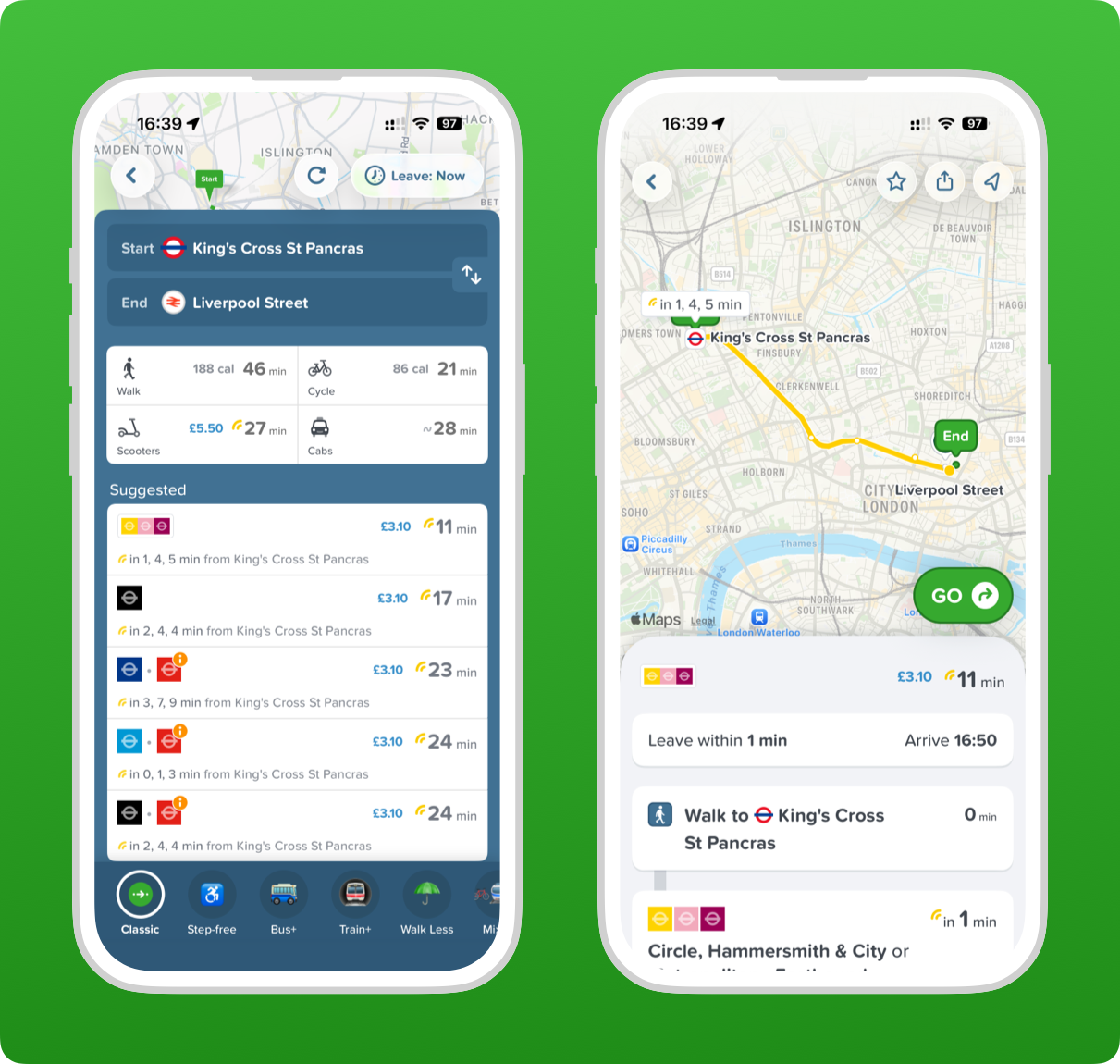
Other solid options are Google Maps and the TfL Go app.
